
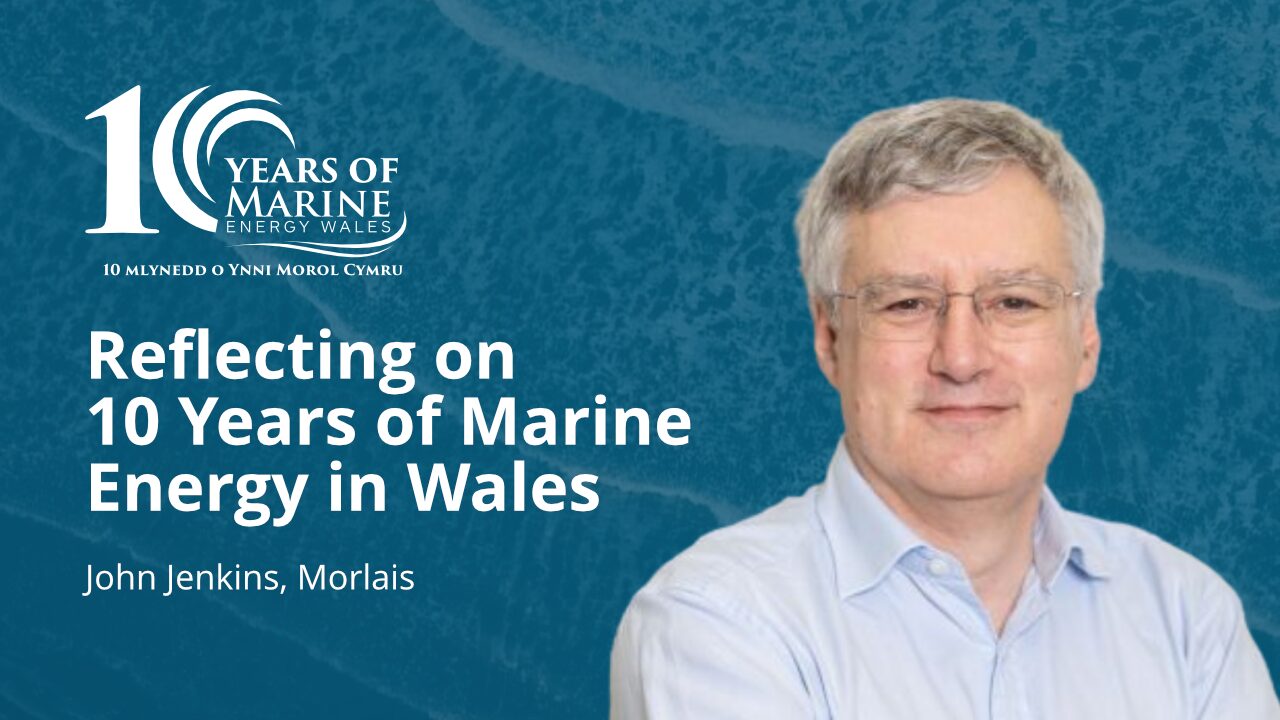
John Jenkins has been involved in renewable energy in Wales for almost 20 years, and has played an integral role in Menter Môn’s tidal stream energy project, Morlais.
He has been a Director of the project since 2018.
Tell us about your current role and your connection to the Welsh marine energy sector, what led you to where you are today?
I first came across Marine Energy Pembrokeshire in 2007, when I attended one of the first conferences. I’m originally from Pembrokeshire, and at the time was looking at fundraising and finance opportunities, and ways to support the economic development of the county. At that time, marine energy was an interesting renewable startup sector.
I was appointed to the board of Pembrokeshire Coastal Forum (PCF) in 2011 and started working professionally in the sector around the same time, initially in offshore wind.
In 2018, I joined the Morlais Tidal Energy Scheme in North Wales, which at that time was just gearing up for delivery, and I’ve been working as a director there ever since.
Looking back over the last 10 years of the sector, what do you think has changed the most?
Over the last decade, the industry has certainly moved on from talking about doing things to doing things and putting devices in the water, which is great. We’re now starting to deliver on the things we’ve been talking about for 10 years and more.
One of the most remarkable things about the sector is the people involved. It attracts individuals who thrive on solving challenges and delivery, and many of the same people who were involved ten years ago are just as involved today.
Has there been a moment in the last decade that made you stop and think, “this industry is actually happening?”
I think during Allocation Round 4 (AR4) of the UK’s Contracts for Difference (CfD) scheme when tidal stream technology was allocated its first ring-fenced budget was a big moment for the industry. To receive government support, which previously had been a major blocker was a huge milestone.
The other major moment for me was the completion of the Morlais substation and its formal opening with Mark Drakeford, the Frist Minister of Wales at the time.
Have there been any tough moments or big challenges for the sector or for you personally during your career? if so what did they teach you?
Having to do a public inquiry during COVID was particularly challenging. Some of the team were effectively put into a witness box and were cross-examined by barristers about why what we were doing at Morlais was a good idea.
Although it was challenging, it did allow us to speak outwardly about how important the development was for North Wales and how it was providing valuable careers for locals who otherwise might have had to move away for work.
“Investors need confidence, and for that confidence to grow they need to see a clear pathway of growth.”
In your opinion, what’s still holding the marine energy sector back today and what are the biggest challenges it still faces?
Funding and finance are still the biggest challenges for the sector today. Investors need confidence, and for that confidence to grow they need to see a clear pathway of growth.
Without clear government policy which shows support, it will be very easy for people to walk away and claim that there is too much uncertainty. The decisions made by government around CfDs and allocation rounds can make it very difficult to build that momentum. When we can build that confidence, things should move quickly.
Another major challenge is around environmental consenting and habitat regulation, being able to prove that there are no negative effects from the technology can be difficult.
What role has Marine Energy Wales played in your own career or organisation and for the wider industry?
Having seen it from multiple angles, both as part of PCF and as a part of the industry initially in Pembrokeshire and then across Wales, seeing how MEW has locked in Welsh Government support has been particularly impressive.
As a member of the industry, the level of knowledge, support and leverage it brings is also highly important to making a successful sector in Wales.
It can be very easy to underestimate how hard it is to run a successful industry event, but MEW has done that consistently with its annual conferences. Getting the right speakers in the room has been a major part of creating the community we have now, rather than just an industry body which everyone ignores.
That knowledge about what’s going on and tracking the growth of the industry in the State of the Sector Report is incredibly valuable and a lot harder than it looks.
if someone reads this article in 2036, what do you hope they’ll say about what the sector has achieved? What are your hopes for the next 10 years?
By 2036 we should be looking at gigawatts of offshore electricity generation, hundreds of jobs, and a vibrant industry base.
I think then we will realise how important the groundwork we’re doing now will be in making it happen. The next couple of years are going to be particularly important as we get projects to financial close and things start building. Suddenly we’ll move from talking about things to delivering them. It’s not going to get easier, but it will certainly look more productive