
Recent visits to Pembrokeshire from senior UK and Welsh Government ministers have highlighted the growing political interest in marine energy. Our Chair, Tam Bardell, reflects on what it means for Wales, and the opportunities and challenges that still lie ahead.
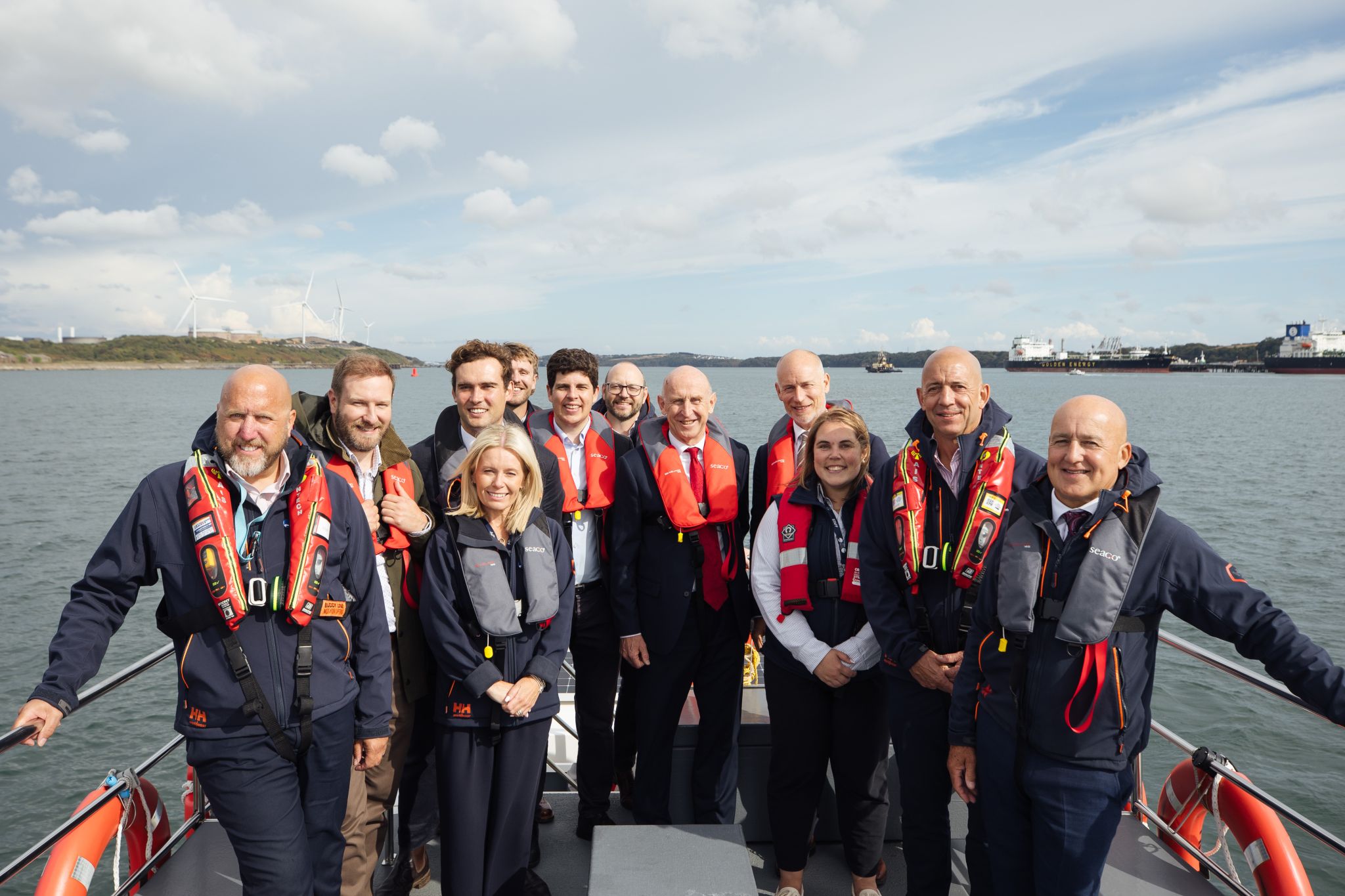
Over the past few weeks, the Port of Milford Haven has welcomed several senior political figures, including Welsh Secretary Stephen Kinnock MP, Chancellor John Healey MP and Welsh Government Cabinet Member for Enterprise, Connectivity and Energy, Adam Price. Each visit brought a slightly different perspective, but all shared a common theme: a recognition of the increasingly important role Wales must play in delivering the UK’s energy future.
As Head of Business Development and Sustainability at the Port of Milford Haven, I spend much of my time focused on the opportunities emerging from offshore wind and marine renewables. I also have the privilege of serving as Chair of Marine Energy Wales, the industry’s national representative body. From both perspectives, it is encouraging to see growing political interest in a sector that is becoming ever more important to Wales’ economy, energy security and industrial future.
What struck me during these discussions was how much the conversation has evolved. Marine energy is no longer being viewed simply as a future aspiration. Increasingly, it is being recognised as an investable industry, the opportunities are understood and clearly, the political interest is there. The focus must now shift towards the practical steps that can turn that interest into investment, deployment and jobs.
That shift is reflected in Marine Energy Wales’ recently published State of the Sector Report 2026. Our data shows that since 2015, almost £365 million has been invested in marine energy and offshore wind activity across Wales, supporting nearly 2,000 jobs. Those benefits are being felt in communities throughout the country, from Anglesey and the Morlais tidal energy zone in the north, to the ports, supply chains and emerging floating offshore wind opportunities of South and West Wales.
Wales is in a strong position. We have some of the best offshore renewable energy resources in Europe, world-leading tidal energy projects progressing towards commercial deployment, and a once-in-a-generation opportunity to become a major hub for floating offshore wind in the Celtic Sea. Yet the challenge facing Wales today is not one of ambition or opportunity, it is one of delivery.
Across the sector, conversations with developers, investors, ports and supply chain businesses consistently return to the same issues. Access to development funding and long-term patient capital is crucial if innovative technologies are to make the transition from demonstration to commercial scale. Grid capacity and connection timelines remain a significant concern as projects seek certainty and pace. Timely investment in port infrastructure will also be essential if Wales is to position itself at the forefront of floating offshore wind deployment and capture the economic value associated with it.
These challenges are not unique to Wales, but how we respond to them will determine whether the benefits associated with this transition are realised here or elsewhere.
That is why recent engagement from both UK and Welsh Government ministers matters. Visits to facilities such as the Port of Milford Haven provide an opportunity not only to showcase what has already been achieved, but also to have honest discussions about the barriers that remain. They create space for industry and government to work together on the practical steps needed to unlock investment, accelerate deployment and strengthen the supply chain.
At Marine Energy Wales, we will continue to work closely with policymakers across Wales and the UK, ensuring that the opportunities and challenges facing the sector are understood, and that marine energy remains firmly on the agenda.
The reality is that no single organisation can deliver this opportunity alone. Success will require continued collaboration between industry, UK Government, Welsh Government, The Crown Estate, ports, developers and investors. Aligning policy, infrastructure and investment behind a shared vision will be critical if Wales is to maximise the benefits available.
The good news is that we begin from a position of strength. Wales already possesses the natural resources, industrial heritage, research capability and maritime expertise needed to succeed. Our ports are gaining clarity about their future role in the energy transition, while companies across the supply chain are positioning themselves to support deployment at scale.
The question now is how quickly we can transform political interest into project delivery, investment decisions and jobs on the ground. If we get that right, the rewards will extend far beyond the energy sector itself. They will be felt in our ports, our coastal communities, our manufacturing base and by future generations who will inherit a cleaner, more resilient and more prosperous Welsh economy.
As Chair of Marine Energy Wales, I am optimistic about what lies ahead. The opportunity before Wales is real, tangible and growing. The task now is to ensure we have the ambition, coordination and commitment needed to capture it.